35 Marylebone High Street
Inscription carved straight into the Granite wall. Ben Jones was a great help!
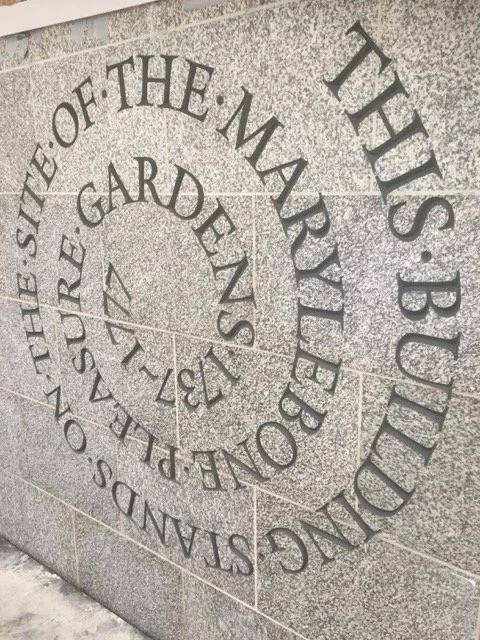
35 MHS - After 2 years in the planning we finally came to carve the spiral inscription on the side of the new building hiding behind the old façade at 35 Marylebone High Street in 2017.
The story began early in 2015 when Edward Jones, from Dixon-Jones architects, asked me to come up with a proposal for the granite clad side of the new building in Beaumont Mews.
He himself liked the idea of really big letters. I wanted to convey the archeology of the site, and show that ‘historically’ the BBC had been buried under the new building.
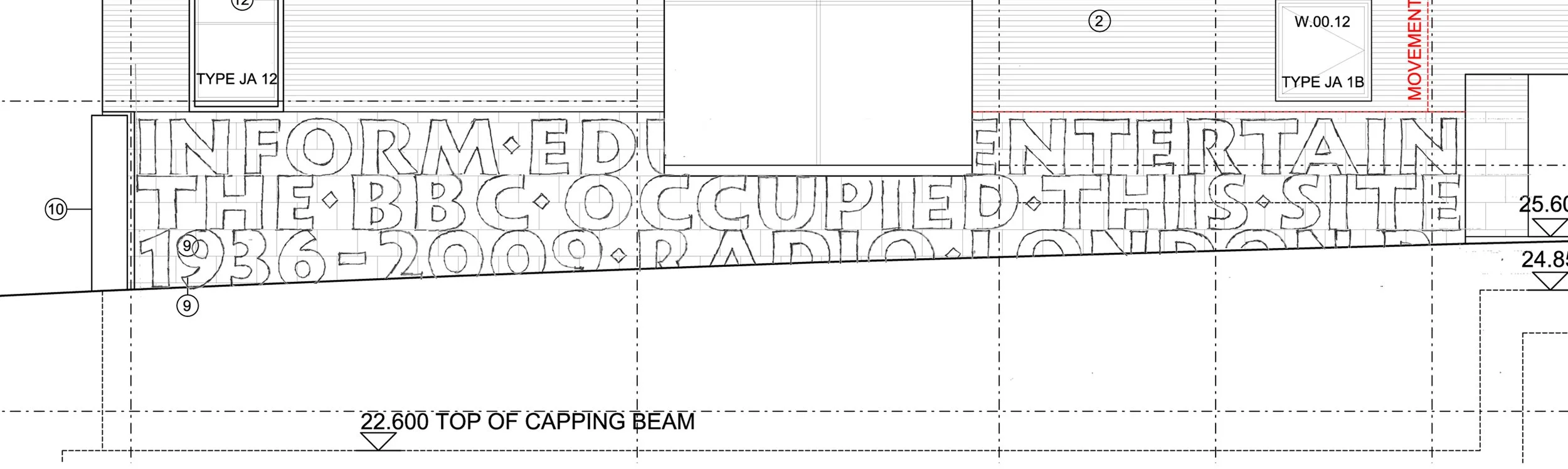
However, the client took one look at the drawing and said: Jimmy Saville – we can’t commemorate the BBC.
One of the assistants at the practice did some research and found that the building would stand on what was once the Marylebone Pleasure Gardens, and that Handel had played there. Hoorah. Edward said: ‘this is like a symbolic blue plaque, so can we do a spiral to suggest this?’ Not so keen on spirals myself I said I would have a go. The work now took up a much smaller part of the wall.
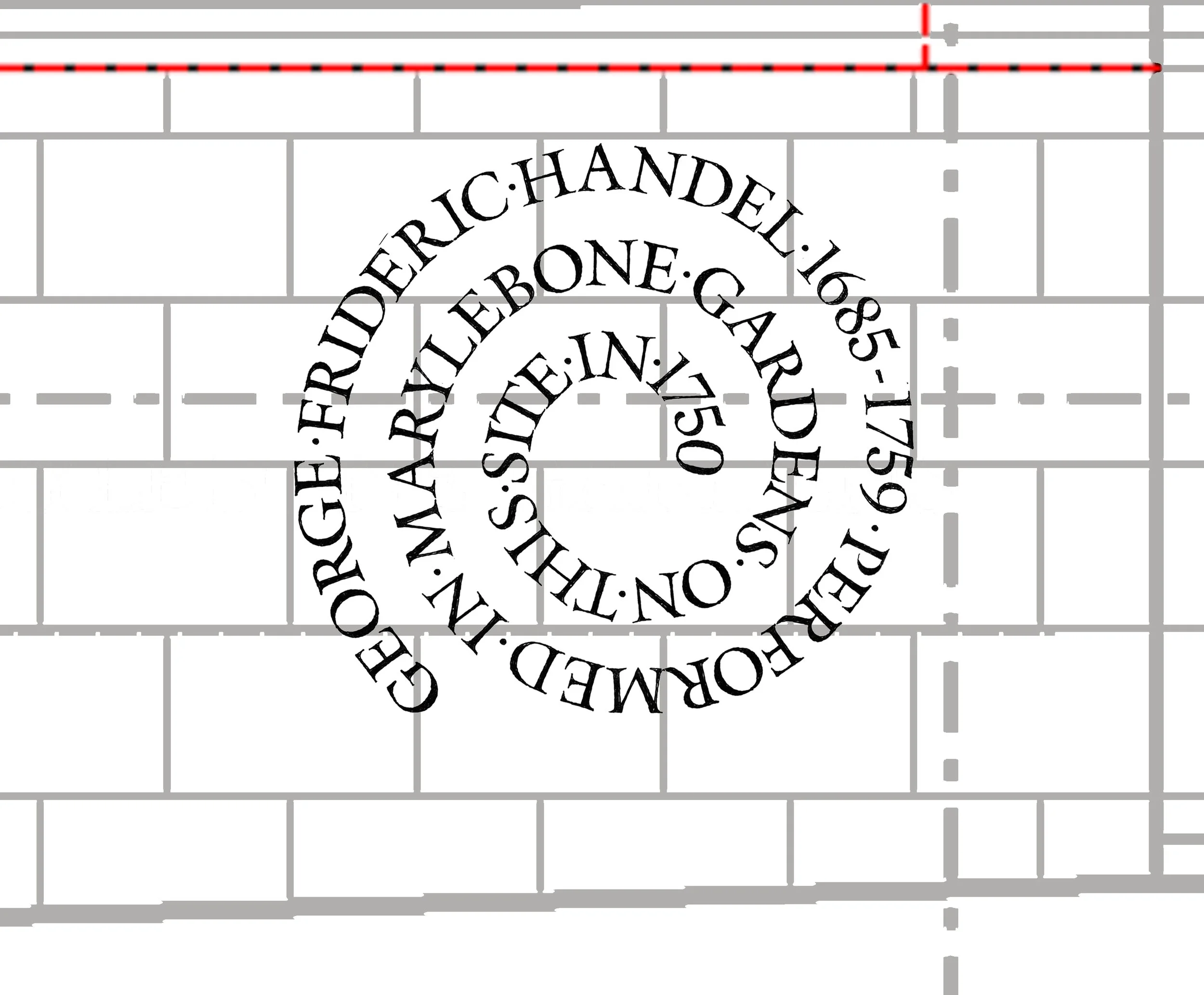
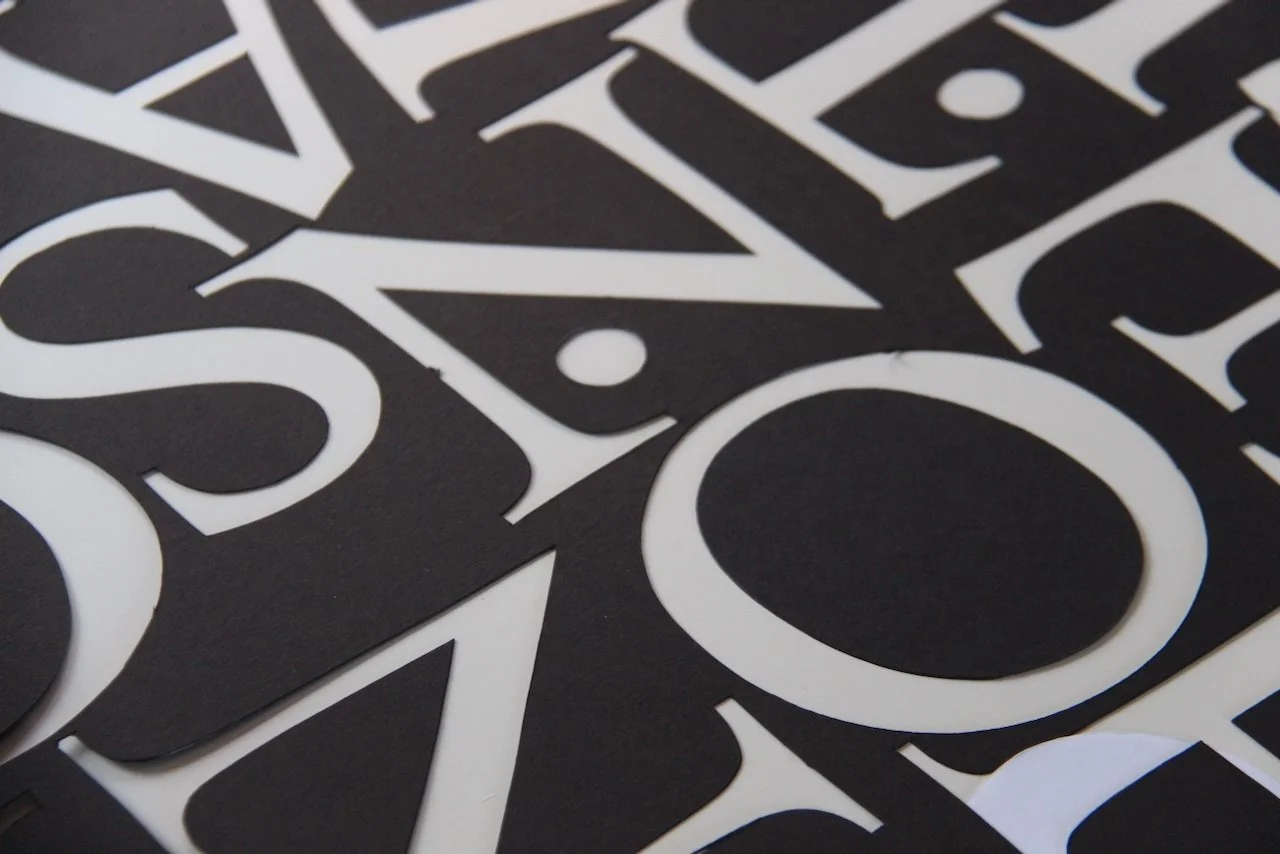
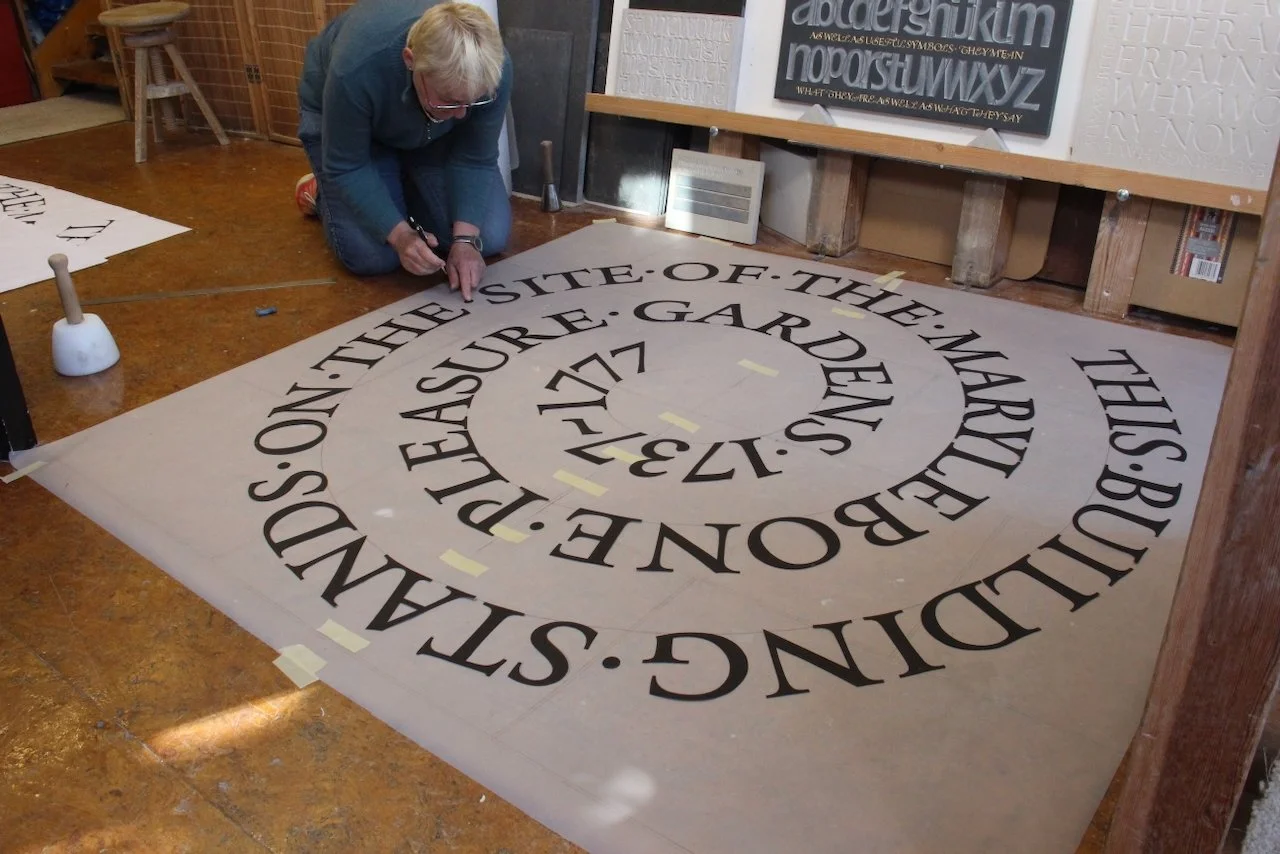
Another year went by and in the spring I asked when the job was going to happen – as we had agreed I would carve it in the summer months. The architect replied that when they tried to apply for planning permission someone had asked for proof that Handel had actually played there. The original assistant who had long since left was tracked down but could not supply convincing proof. The wording would need to be changed. We reapplied with the new words and the summer went by. I thought I would not wait for planning permission to be granted but start on the full size drawing. Constructing a spiral is quite complicated, but even more so if it has to start and finish in pre-ordained places. I could not check the granite on site as it was boarded up the moment it was fixed. All I had were the block and mortar sizes, and the architects drawing. I worked on the studio floor so I could look down on it to check the spacing. Then I cut the templates, put them on the drawing and checked and altered the spacing again.
I ordered new AllOrr granite chisels from Travis&Son and waited. We – Ben Jones who had agreed to help me and I - were told early October, then we were told early November.
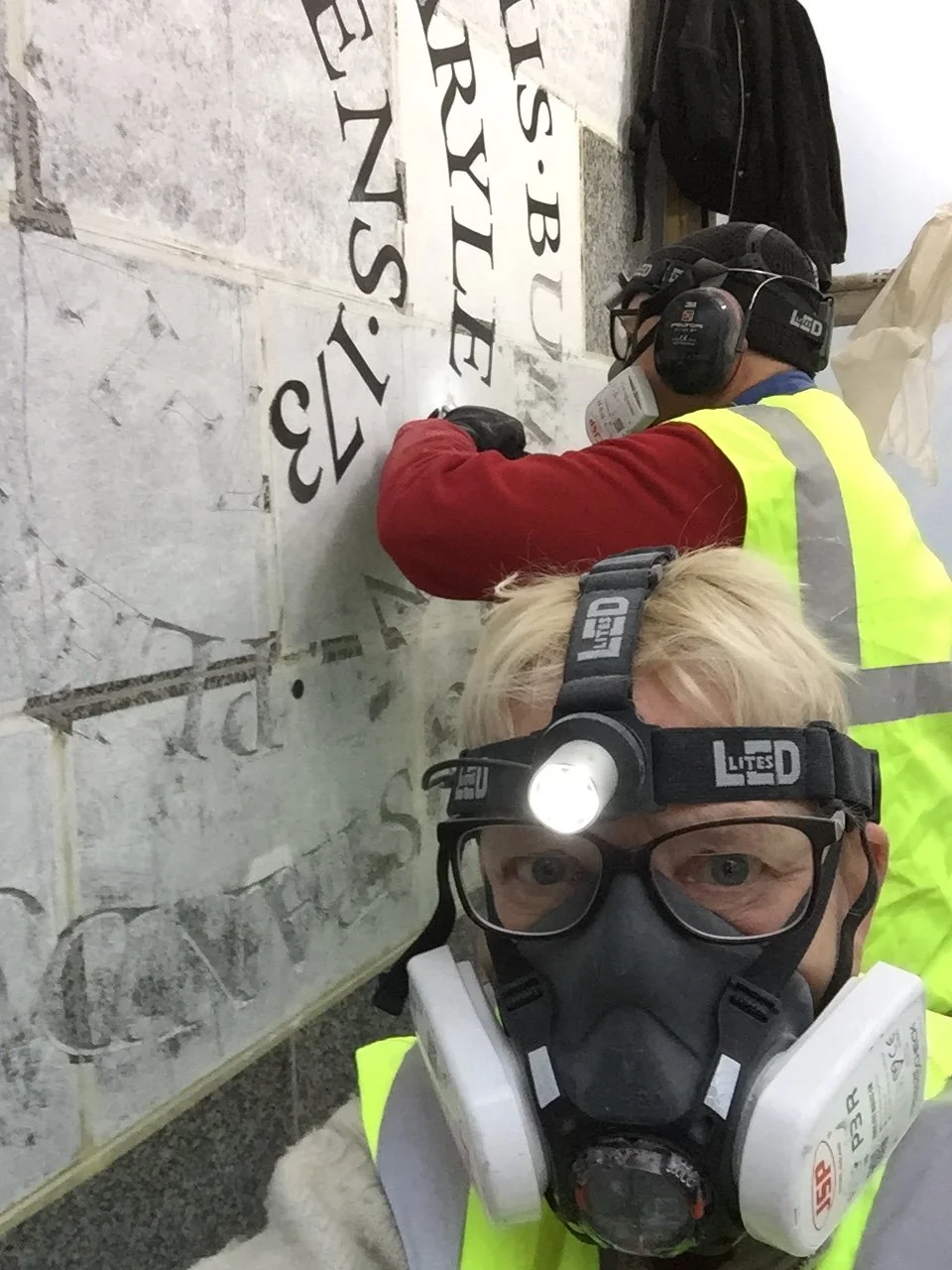
Early November it was. A regime of up early, train to Marylebone, a 10 minute walk and straight to work. I had devised a cunning plan for transferring the drawing to the stone: I had a copy made of the full size drawing onto tracing paper, and this I had cut up into the blocks of the stone shapes. We would stick the tracings onto each block, and could then insert the templates, with their double sided tape, under the drawing, and stick them in the right place on the wall. We could sort out the inevitable differences between the drawing and the built wall quite easily by moving a few letters very slightly. Then we would draw around the templates. I had brought permanent marker pens but they would not work on the damp paint, so we used pencil.
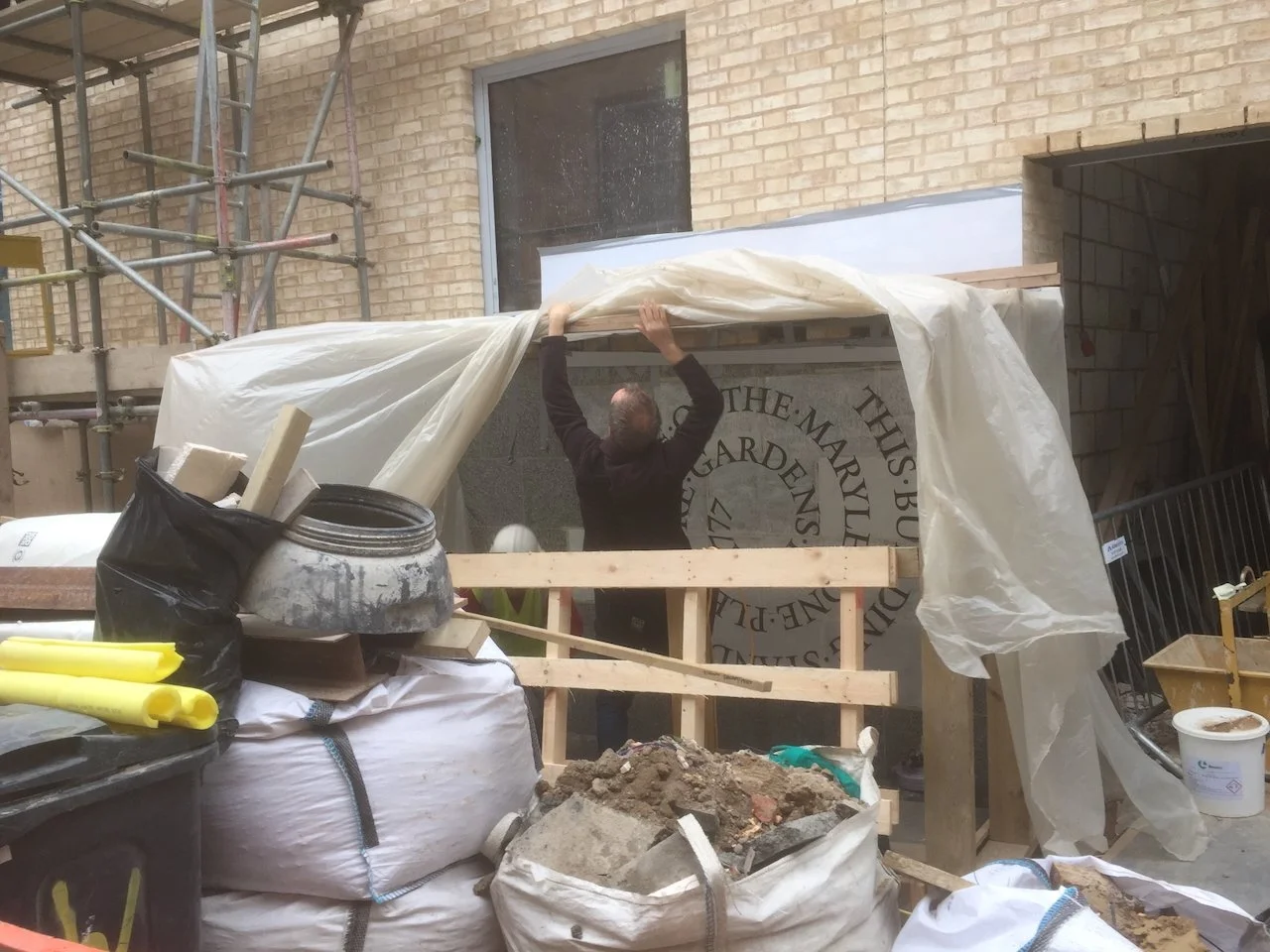
However before we could lay out the inscription we had to paint the very shiny wall with emulsion, and tape up the mortar so this would not get stained. To get the paint to dry on that cold November day took longer than transferring the drawing. Blow torches were used, and a dehumidifier. Whilst we waited Ben did a really good job making our plastic hut secure against the weather.
The next day the architect came to give the final ok and away we went. Or so we thought. The compressor needed to drive Ben’s pneumatic hammer had not been delivered as promised and when it arrived a day late we could not get it to work as the electrics on site were weak and our lead was too long. We went home in despair and went looking for a petrol one to hire. We found one and could then start carving seriously.
Ben roughed out all the letters and I finished them off, learning on the job that carving granite requires quite a different technique to carving stone. In the middle of the work we had to jump in a taxi to get more petrol – we both worried unnecessarily about whether the taxis would refuse to take us in these ‘first thought: terrorist’ days. All in all it took us 3 weeks to carve and then paint in the letters with masonry paint. And I must say we usually have a more sociable time when we carve limestone inscriptions, the compressor was very noisy and we wore masks and ear protection so communication was haphazard!